What Are Solar-Powered Health Stations? Remote Screening Explained
A research-based look at solar powered health stations remote screening, from energy reliability and field workflows to evidence from global health deployments.
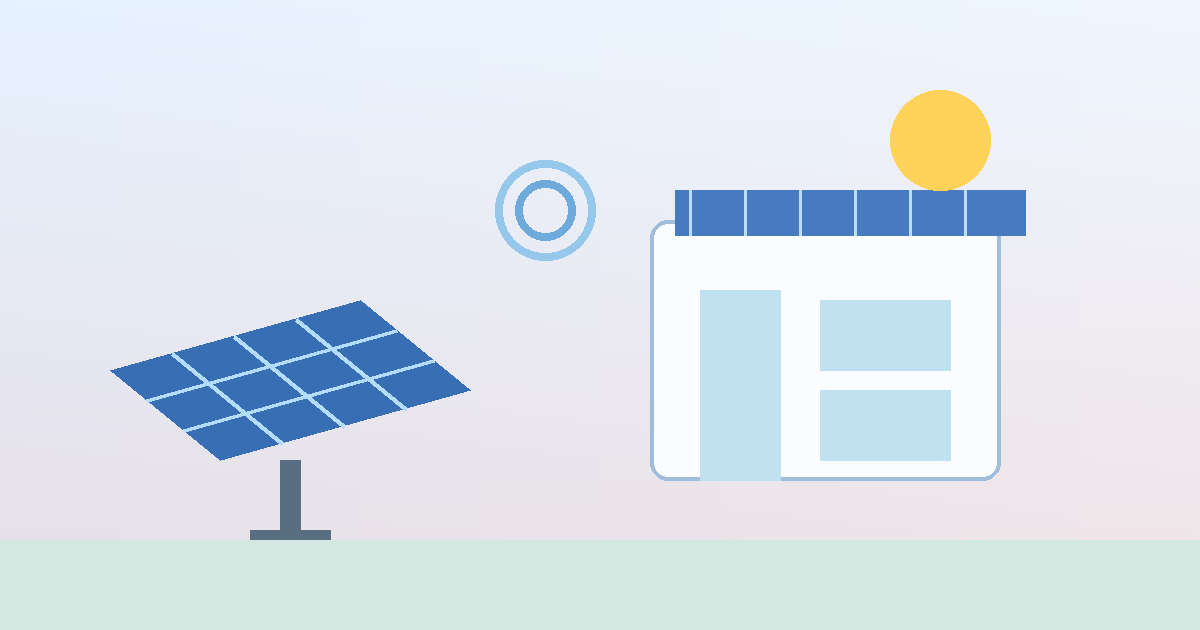
Solar powered health stations remote screening is getting real attention because many screening programs still fail for a boring reason: the power does not hold. A clinic may have a trained nurse, a referral workflow, and a queue of patients, then lose refrigeration, lighting, connectivity, or charging capacity by noon. In that setting, a solar-powered health station is not just an energy upgrade. It becomes the operating base for triage, maternal checks, vaccination support, digital registration, and hardware-light screening in places where grid reliability cannot be assumed.
"Close to one billion people globally are served by health-care facilities with no electricity access or with unreliable electricity." — WHO, World Bank, IRENA and SEforALL, Energizing Health (2023)
Why solar powered health stations remote screening matters
At the simplest level, a solar-powered health station is a clinic, outreach post, container unit, kiosk, or mobile setup that uses solar generation and battery storage to keep core health services running. Remote screening then sits on top of that energy layer. Workers can register patients, run basic triage, power a tablet or phone, keep vaccines cold, charge communication devices, and move people toward confirmatory care without depending on diesel deliveries or a stable local grid.
That sounds obvious, but the operational difference is bigger than it first appears. Remote screening programs in low-resource settings usually break at the edges:
- Devices cannot stay charged through a full outreach day
- Refrigeration fails and immunization workflows suffer
- Connectivity comes and goes, so records are delayed
- Nighttime labor, emergencies, and referrals happen without dependable lighting
- Portable equipment sits idle because the energy base is fragile
The 2023 WHO-led Energizing Health report put numbers behind the problem. It found that nearly one billion people are served by facilities with no electricity or unreliable electricity, and estimated that about US$4.9 billion is needed to bring facilities in 63 low- and middle-income countries up to a minimal electrification standard. For medhealthscan.com's audience, that is the real starting point. Remote screening is not just a software question. It is an infrastructure question.
Comparing common frontline models
| Model | Energy foundation | What screening teams can reliably do | Main constraint |
|---|---|---|---|
| Grid-dependent rural post | Public grid only | Basic paper triage when power is available | Frequent downtime and charging gaps |
| Generator-backed clinic | Diesel or petrol | More equipment uptime during staffed hours | Fuel cost, maintenance, and logistics burden |
| Solar-powered health station | Solar plus batteries | Day-long digital intake, charging, lighting, cold-chain support, teleconsultation, and hardware-light screening | Upfront design and storage sizing matter |
| Fully mobile outreach team | Portable batteries and ad hoc charging | Short campaign screening rounds | Limited endurance and weaker data continuity |
The solar-powered model stands out because it stabilizes the whole workflow, not just one device. Once power becomes predictable, remote screening becomes easier to schedule, supervise, and integrate with referral networks.
Industry applications for solar-powered screening infrastructure
Community and primary care outposts
The clearest use case is the small primary care facility or community outpost that needs to do a little of everything. In practice that can mean antenatal triage in the morning, immunization support by midday, and urgent assessment after dark. A solar-powered station helps keep lights, refrigeration, charging, and digital forms running at the same time. That matters more than adding a complex device stack. In many districts, reliable basics create more value than an advanced diagnostic tool that cannot stay powered.
Mobile and campaign-based screening
Mobile health deployments often rely on temporary sites, outreach tents, modular kiosks, or retrofitted vehicles. These programs need power for tablets, routers, communication tools, and sometimes diagnostic accessories. Solar-backed stations reduce dependence on fuel supply chains and let teams spend more time screening and less time solving generator problems.
UNICEF's solarization work offers a useful signal here. Agent-search surfaced UNICEF reporting that the organization has supported solarization and off-grid energy solutions in more than 80 countries and helped install over 88,000 solar cold-chain vaccine fridges since 2017. That is not a niche experiment. It shows that solar-backed health infrastructure is already operating at real program scale.
Maternal, newborn, and vaccine workflows
This is where the energy issue becomes painfully concrete. A remote screening station may not be performing definitive diagnostics, but it still depends on dependable lighting, communication, charging, and temperature control. Maternal triage, newborn assessment, and immunization sessions become more dependable when the facility is not constantly switching between outage mode and recovery mode.
Remote supervision and teleconsult support
Not every solar-powered site needs to host a specialist. Often the goal is to make the frontline encounter visible to someone else. With stable power, a nurse or community health worker can sync records later, join a teleconsult, or transmit a referral summary. Remote screening becomes less isolated.
Current research and evidence
The evidence base around solar-powered health stations is stronger on operations than on hype, which I think is the right way to read it.
First, the WHO, World Bank, IRENA, and SEforALL collaboration in 2023 documented how widespread electricity gaps still are in health facilities. The report noted that in sub-Saharan Africa only about half of hospitals had reliable electricity, while primary facilities and rural sites were much less likely to have dependable access. That tells implementers something important: remote screening programs are often being designed on top of unstable physical infrastructure.
Second, a 2026 Lancet Global Health paper by L. H. Kwong, Rob Bailis, and colleagues argued that energy poverty remains deeply tied to health outcomes in low- and middle-income countries. Agent-search returned one particularly useful estimate from the paper's related reporting: roughly 433 million people in low-income countries rely on health facilities with no electricity at all. The article's broader point was hard to miss. Clean, reliable energy is not peripheral to care delivery; it shapes whether services can happen consistently.
Third, field-level evidence from Papua New Guinea adds a more grounded perspective. In a 2023 qualitative study on solar power and oxygen concentrators in rural facilities, van der Sijde and colleagues examined how healthcare workers experienced the introduction of solar-backed systems. The value was not framed as technological novelty. Workers linked the systems to better continuity of service, stronger confidence in care delivery, and less dependence on fragile workarounds.
Fourth, review literature is catching up to what implementers have been seeing on the ground. Agent-search identified a 2023 review by M. A. Al-Ghussain and H. M. Al-Hamad on solar energy solutions for healthcare in rural areas of developing countries. The review focused on technologies, constraints, and deployment tradeoffs rather than treating solar as a one-size-fits-all answer. That is a useful corrective. Solar-powered health stations work best when designers size the system around actual workload: refrigeration, communications, lighting, charging, and whatever screening workflow the site is expected to support.
A few practical lessons keep repeating across the evidence and deployment reports:
- Reliable power often improves workflow consistency before it improves any headline metric
- Cold chain, lighting, and charging are as important as diagnostic devices
- Solar works best when paired with batteries, maintenance planning, and basic local training
- Remote screening should be scoped as triage and referral support, not as a replacement for confirmatory care
- Ministries and donors increasingly want power systems that support digital continuity, not just standalone equipment
The future of solar-powered health stations
The next phase is likely to be more integrated and less gadget-driven. The strongest solar-powered health stations will probably combine four layers: dependable energy, offline-first digital workflows, lightweight screening tools, and a pathway into district or national data systems. That is a far better long-term bet than building flashy pilot stations that cannot be serviced six months later.
I also expect the definition of remote screening to widen. In some settings it will still mean digital registration, symptoms, and referral capture. In others it may include camera-based vital-sign estimation, queue triage, automated reminders, or teleconsult escalation. But the common requirement stays the same: the system has to stay on.
For global health researchers, USAID and PEPFAR implementers, and mobile health platform teams, the strategic question is no longer whether off-grid health energy matters. It is how to design solar-backed stations that support the whole first-mile workflow without creating a heavy hardware burden for community workers.
Frequently Asked Questions
What is a solar-powered health station?
Usually it is a clinic post, outreach site, mobile unit, or modular facility that uses solar panels and battery storage to run core health services such as lighting, refrigeration, charging, connectivity, and digital workflows.
How does remote screening fit into a solar-powered station?
Remote screening sits on top of the energy layer. Workers can power phones, tablets, communication tools, registration systems, and lightweight screening workflows more reliably, then move patients into referral or confirmatory care.
Are solar-powered health stations only for vaccination programs?
No. Vaccination and cold-chain support are important use cases, but solar-backed stations also support maternal health, community triage, teleconsultation, after-hours care, and field data collection.
Do solar-powered health stations replace clinics or laboratories?
No. They usually strengthen the frontline layer of care. Their main value is making first-contact services, screening, and basic operations more reliable in low-resource settings.
For related reading, see our analysis of how smartphone screening integrates with DHIS2 and how contactless screening supports TB and HIV programs. For broader global health deployment thinking, solutions like Circadify are being built for this direction of travel in field screening. Explore more at Circadify's global health research hub.