
Interoperability Standards for Global Health Platforms: A Guide
A research-based guide to interoperability standards for global health platforms, including FHIR, OpenHIE, DHIS2, and WHO SMART Guidelines in low-resource settings.
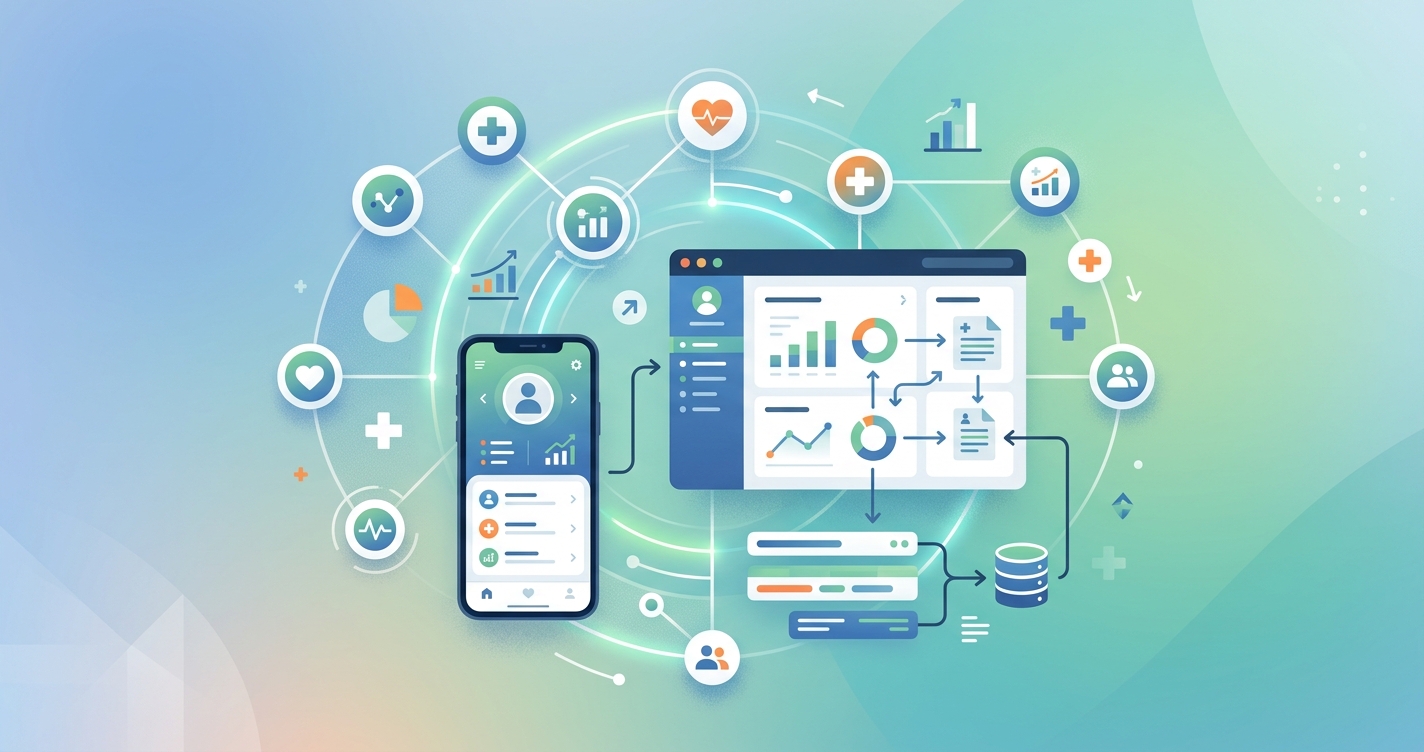
Interoperability standards global health platforms are no longer a back-office concern. They now sit near the center of program design. A screening workflow can begin on a community health worker's phone, move into a district dashboard, trigger a referral, and feed a national reporting system in the same week. If those systems cannot exchange data in a shared structure, the result is familiar: duplicate entry, fragmented records, and reporting delays that make scale look better on paper than it feels in the field.
"Digital adaptation kits provide a common language for health program managers, software developers, and implementers." — WHO SMART Guidelines work cited by Bernadette Daelmans and colleagues
Why interoperability standards for global health platforms matter now
The pressure has been building for years. WHO's Global Strategy on Digital Health 2020-2025 pushed countries and partners toward reusable digital public infrastructure, open standards, and better governance. At the same time, national programs kept adding new digital tools for TB, HIV, immunization, maternal health, logistics, and community workflows. The problem is obvious if you have spent any time around these programs: every useful tool creates a new integration problem.
That is why interoperability is not really about elegant architecture diagrams. It is about whether a ministry can combine data from screening, case management, and reporting without funding another layer of manual reconciliation. I keep coming back to that practical point. In global health, standards only matter if they lower operational friction.
The current standards conversation usually revolves around four layers:
- HL7 FHIR for structured health data exchange
- OpenHIE for exchange architecture and shared services
- DHIS2 for country reporting, aggregate data, and person-level workflows
- WHO SMART Guidelines and digital adaptation kits for making policy logic machine-readable
These are not interchangeable. They solve different parts of the same problem.
Comparison of major interoperability approaches
| Approach | Primary role | Best fit in global health programs | Main operational question |
|---|---|---|---|
| HL7 FHIR | Standardized data model and APIs | Exchanging clinical and program data across systems | Do both systems map to the same resources and profiles? |
| OpenHIE | Reference architecture and shared registries | National or multi-program exchange environments | Which shared services should sit above individual apps? |
| DHIS2 interoperability tools | Program implementation and reporting integration | Aggregate reporting, Tracker programs, ministry dashboards | What belongs inside DHIS2 versus a separate app or registry? |
| WHO SMART Guidelines | Translating policy into digital workflows | Standardizing decision logic across countries and vendors | Are workflows and indicators defined consistently enough to implement? |
The standards stack global health teams actually use
In practice, global health teams rarely choose one standard and call it done. They assemble a stack.
FHIR has become the most visible data exchange standard because it gives implementers a common format for resources such as patients, observations, encounters, and service requests. WHO and HL7 have been working together to expand adoption of open interoperability standards, and that partnership matters because many country teams want a signal that FHIR is not just a high-income-market standard. They want to know it can support national public health systems too.
But FHIR alone does not decide how a country's ecosystem should be organized. That is where OpenHIE usually enters the picture. OpenHIE describes a modular architecture with elements such as client registries, facility registries, terminology services, and an interoperability layer that can broker exchange among multiple systems. For ministries dealing with fragmented digital portfolios, that architectural thinking is often more useful than a single API specification.
DHIS2 adds another layer. It is not only a dashboard. In many countries it is the operational data backbone for program reporting and, increasingly, event and Tracker workflows. DHIS2's interoperability work, including its FHIR-related tooling and Health Data Toolkit, reflects a simple reality: national programs do not want every new screening or service-delivery tool to create a separate data island.
Then there is the policy layer. WHO SMART Guidelines and digital adaptation kits try to convert narrative recommendations into structured workflows, indicators, and decision logic. The 2025 JMIR Medical Informatics paper by Rosemary K. Muliokela, Kuwani Banda, Abdulaziz Mohammed Hussen, and colleagues is useful here because it moves the conversation away from theory. Their report on African pathfinder countries showed that digital adaptation kits helped standardize processes while still leaving room for local program adaptation.
Where interoperability standards break down in low-resource settings
This is the part that gets flattened too often. The standards themselves are usually not the main obstacle. The real obstacles are implementation capacity, governance, and sequencing.
A systematic literature review on FHIR implementations by Muhammad Ayaz, Muhammad F. Pasha, Mohammed Y. Alzahrani, Rahmat Budiarto, and Deris Stiawan found recurring challenges around legacy integration, privacy, technical skills, and data consistency. Those problems hit harder in low-resource settings because connectivity is uneven, technical teams are small, and partner ecosystems are crowded.
A few breakdown patterns show up again and again:
- Programs adopt a standard name without agreeing on profiles, code systems, or governance
- Multiple donor-funded tools connect to the national platform in slightly different ways
- Offline workflows are treated as an edge case rather than the default field condition
- Registries and identifiers are weak, so matching records across systems becomes unreliable
- Reporting requirements evolve faster than system configurations
In other words, the problem is rarely "we need interoperability." The problem is "which systems exchange what data, under whose rules, and with whose maintenance budget?"
Industry applications for interoperability standards in global health platforms
HIV and TB programs
HIV and TB programs often need a mix of community screening, longitudinal follow-up, laboratory workflows, and national reporting. That makes them a natural stress test for interoperability. A phone-based screening tool may capture symptoms or contact history, while confirmatory services and treatment data live elsewhere. Without shared exchange standards, linkage across the care pathway gets messy fast.
Community health worker platforms
Community workflows create another pressure point because they operate offline, across catchment areas, and often through several partner organizations. Interoperability matters here not because every record must move in real time, but because supervisors and national teams need those records to reappear in trusted systems later.
Emergency and outbreak response
Pandemic preparedness and outbreak response raise the stakes. During a surge, programs may stand up screening, referral, and surveillance tools quickly. Standards help when the emergency stack eventually needs to connect back into routine systems instead of remaining a parallel reporting stream.
Current Research and Evidence
Several evidence strands support the case for treating interoperability as core infrastructure rather than optional polish.
First, WHO's digital health strategy made open standards and interoperability a formal policy priority, not just an implementer preference. That matters because country teams often need a policy anchor before they can resist one-off vendor or donor architectures.
Second, WHO's collaboration with HL7 has pushed FHIR further into global health conversations. The point is not that every ministry should rebuild around FHIR overnight. The point is that shared profiles and open standards can reduce the cost of connecting systems over time.
Third, OpenHIE's architecture work remains important because it frames interoperability as a services problem, not only a message-format problem. Shared registries, terminology services, and interoperability layers sound abstract until you try to run a national exchange environment without them.
Fourth, DHIS2's interoperability and FHIR work shows how national reporting platforms are adapting to a more exchange-driven environment. That shift matters for implementers because it lowers the pressure to choose between frontline usability and ministry alignment.
Fifth, the 2025 JMIR Medical Informatics article on WHO SMART Guidelines pathfinder countries gives one of the better field-grounded signals in this space. Muliokela and colleagues reported that digital adaptation kits helped countries standardize workflows while customizing them to local realities. That is a much better description of successful interoperability than the usual fantasy of one universal template.
What strong interoperability programs usually have in common
- A clear national owner for standards decisions
- A realistic data governance model for identifiers, consent, and access
- Agreement on which data should move in real time and which can sync later
- Local implementation support, not just external architecture advice
- A plan for profile maintenance after pilot funding ends
The Future of Interoperability Standards for Global Health Platforms
The next few years will probably be less about inventing new standards and more about making the existing stack usable in tougher operating conditions.
One likely trend is more practical FHIR adoption through narrower use cases. Instead of trying to standardize an entire health system at once, programs will probably focus on referrals, observations, registries, and a few high-value workflows first.
Another trend is tighter alignment between WHO SMART Guidelines and implementation platforms. If policy logic becomes easier to configure in tools already used by ministries and implementing partners, interoperability stops feeling like an extra integration project and starts feeling like normal system design.
I also expect OpenHIE-style architectural thinking to stay relevant, especially where national digital ecosystems are crowded. Countries do not just need standards. They need boundaries: what sits in the app, what sits in the registry, what sits in the exchange layer, and what should never be duplicated in the first place.
For field programs using smartphone-based or contactless screening, that future matters a lot. A low-friction screening workflow only scales cleanly if it can feed the systems ministries already trust.
Frequently Asked Questions
What are the main interoperability standards used in global health platforms?
The most common standards stack includes HL7 FHIR for data exchange, OpenHIE for exchange architecture, DHIS2 interoperability tooling for national program integration, and WHO SMART Guidelines for translating policy into structured digital workflows.
Is FHIR enough on its own for global health interoperability?
Usually no. FHIR helps standardize data exchange, but programs still need governance, registries, workflow design, and decisions about how systems connect in low-connectivity environments.
Why is OpenHIE still relevant if programs are adopting FHIR?
Because OpenHIE addresses architectural questions that FHIR does not solve by itself. It helps programs think about shared registries, interoperability layers, and how multiple systems should work together across a national ecosystem.
How do WHO SMART Guidelines help with interoperability?
They turn policy and clinical guidance into structured logic that software teams can implement more consistently. That makes it easier for different tools to align around the same workflows, indicators, and decision rules.
Interoperability works best when field data can move into systems that ministries and implementing partners already use. For teams tracking how contactless and smartphone-based screening fit into that picture, Circadify is building toward these workflows. Explore our global health research hub, or continue with related reading on how smartphone screening integrates with DHIS2 and how contactless screening supports TB and HIV programs.