
How PEPFAR Implementing Partners Integrate Contactless Screening Into HIV Programs
A research-based analysis of how PEPFAR implementing partners integrate contactless screening into HIV programs through digital triage, referral workflows, and lighter field operations.
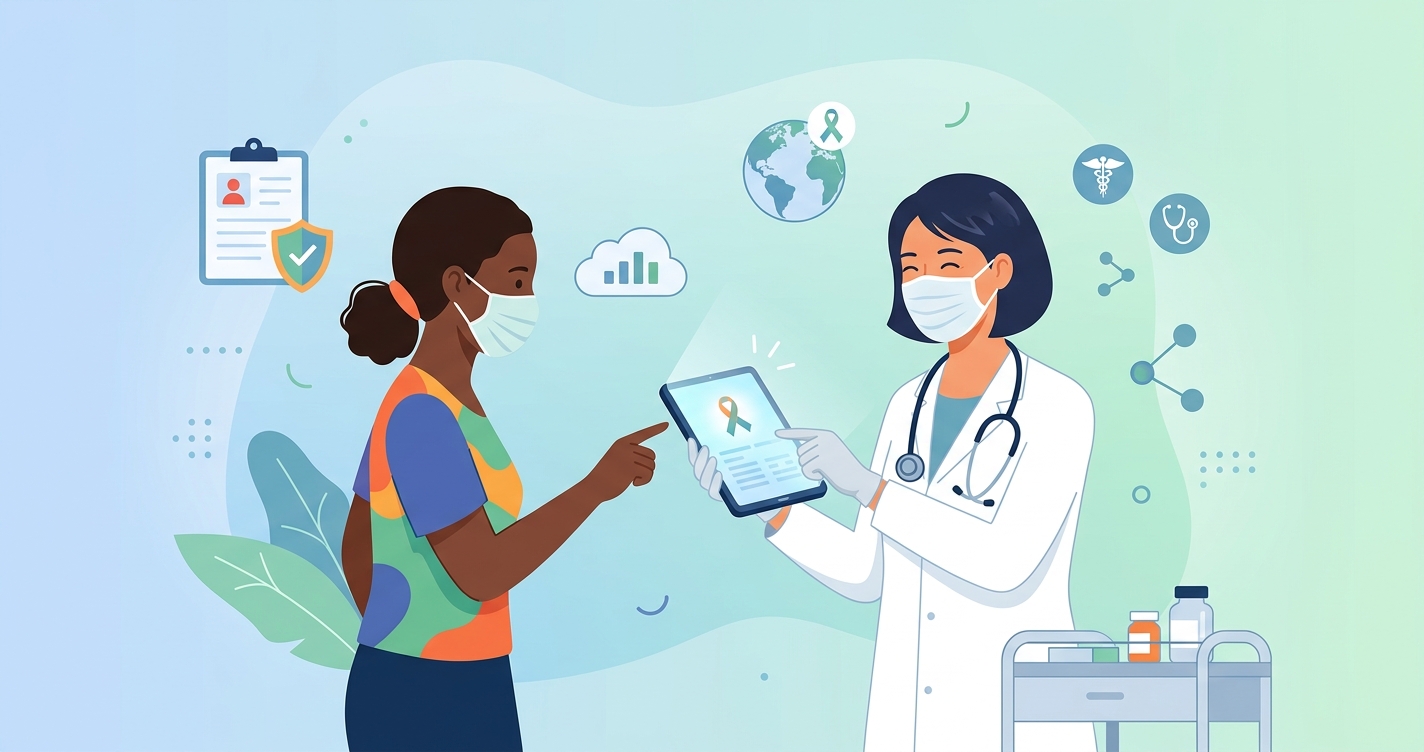
PEPFAR implementing partners contactless screening HIV workflows are starting to converge around a practical idea: reduce friction at the first point of contact, then move people into stronger referral and follow-up pathways. In most HIV programs, the limiting factor is not whether a country has an official testing algorithm. It is whether frontline teams can identify risk, document it consistently, and connect clients to the next service without adding another hardware burden. That is where contactless or hardware-light screening starts to make operational sense.
"WHO updates HIV testing guidance: more self-testing, integration, and prevention support." — World Health Organization, July 2024
Why PEPFAR implementing partners contactless screening HIV workflows are getting attention
PEPFAR's big implementing partners already run large digital health estates: community testing platforms, referral dashboards, patient tracking tools, interoperability layers, and supervisory reporting systems. Contactless screening fits into that world best when it is treated as one more front-end workflow layer, not as a standalone diagnostic answer. I think that distinction matters. The point is not to replace confirmatory HIV testing. The point is to make outreach and triage easier to run in community settings where time, power, and equipment are always constrained.
That logic lines up with the World Health Organization's 2024 differentiated HIV testing guidance, which expanded support for self-testing, service integration, and prevention-linked testing pathways. It also lines up with the long-running shift inside PEPFAR programs toward community-led case finding, index testing support, and decentralized service delivery. Once HIV programs move beyond the clinic wall, lighter screening workflows become more valuable.
The same pattern shows up in TB-HIV integration. WHO says people living with HIV are about 14 times more likely to develop TB disease than people without HIV, and it continues to recommend systematic TB screening for this population. In the field, that means implementing partners are often trying to capture multiple signals during a single encounter: HIV risk, TB symptoms, treatment interruption, referral needs, and follow-up status. A phone-led or contactless intake flow is attractive because it can reduce duplicate data entry and shrink the amount of gear a worker has to carry.
Comparison of screening models in PEPFAR-supported HIV programs
| Model | Frontline workflow | Operational upside | Main constraint |
|---|---|---|---|
| Paper-first outreach | CHWs record symptoms, risk, and referrals manually | Low startup complexity | Slow reporting and weak longitudinal tracking |
| Device-heavy field screening | Workers use multiple peripherals and specialized devices | More measurement depth in selected use cases | Charging, replacement, transport, and training burden |
| Contactless or hardware-light screening | Smartphone-led intake, symptom capture, digital referral prompts, and optional camera-based signals | Faster workflows and lower equipment dependence | Still depends on confirmatory testing and care linkage |
| Hybrid HIV workflow | Contactless triage in the community plus facility-based confirmatory testing | Better balance between reach and clinical rigor | Requires solid data handoff into program systems |
That hybrid model is probably the most realistic description of where many PEPFAR programs are headed. Community teams use lighter digital workflows to widen the funnel. Facilities and laboratory networks handle confirmatory testing, clinical review, and treatment initiation.
A few things make this model appealing for implementing partners:
- Community teams can screen more people without carrying a larger device stack.
- Supervisors get cleaner referral visibility when intake happens digitally.
- Integrated TB-HIV prompts reduce handoff failures.
- Offline-first workflows matter in districts with inconsistent connectivity.
- Lower-friction encounters fit better with self-testing and community testing models.
Where implementing partners are using digital layers today
Community HIV testing and referral
The WHO 2024 guidance pushed HIV testing services toward broader integration, including self-testing support for PrEP and PEP pathways and stronger network-based approaches. For implementing partners, that means the first interaction is increasingly distributed across peers, outreach workers, pharmacies, community campaigns, and digital channels. A contactless screening layer works in that environment because it can collect structured intake data before confirmatory services happen.
A 2024 systematic review of HIV self-testing with digital supports, covering 46 studies from 2010 to 2021, found that web, app, social, and SMS-based supports were generally feasible and acceptable. The review reported linkage-to-care ranges of 53% to 100% depending on the model. That is not proof that every digitally supported workflow performs equally well, but it does show that HIV programs already rely on low-friction digital entry points more than they did a few years ago.
Implementing partner platforms and CHW operations
Agent-search results also surfaced ICAP's digital health work and its Tanzania program footprint, where the organization has supported HIV prevention, testing, and care in partnership with government and with PEPFAR backing. In parallel, Dimagi's CommCare platform has become one of the better-known tools for community workflows in infectious disease programs, including HIV-related adherence and follow-up. The important point is not whether every implementing partner uses the exact same software. They do not. The point is that PEPFAR's delivery model already depends on digital case management at the edge.
That makes contactless screening easier to integrate than it might look from the outside. If a worker already opens a phone to capture risk status, contacts, symptoms, referrals, or treatment follow-up, adding a lighter screening layer is an operational design question, not a philosophical leap.
TB-HIV integrated screening
TB screening remains one of the clearest use cases. WHO continues to frame TB as a leading cause of death among people living with HIV, which makes integrated screening hard to avoid in high-burden settings. A contactless workflow cannot confirm TB or HIV. It can, however, help workers standardize symptom review, record risk flags once, and move clients toward the right testing and care pathway.
For implementers, that is often the real value: a simpler first mile. In a large HIV program, missed referrals and inconsistent follow-up create more operational drag than the lack of a new gadget.
Current research and evidence
Several research and policy signals are pushing HIV programs toward this lighter screening architecture.
First, the WHO's July 2024 differentiated HIV testing guidance expanded support for self-testing, integration, and prevention-linked delivery. That matters because it normalizes distributed testing entry points rather than assuming every client will start in a facility.
Second, the 2024 systematic review of HIV self-testing with digital supports found strong feasibility across web-based, social-media, app, SMS, and digital-vending models. The review covered 46 studies and found high acceptability in many formats, with some web-based models reporting feasibility above 90%. That is useful evidence for implementing partners that need to justify digitally mediated screening and referral workflows.
Third, WHO's TB-HIV guidance still underscores the urgency of integrated screening in HIV programs. People living with HIV face sharply elevated TB risk, and systematic screening remains part of the expected care model. In practical terms, that favors workflows that can capture HIV-related and TB-related screening data in one short encounter.
Fourth, PEPFAR's own long-range strategy has leaned toward more data-driven delivery, stronger digital infrastructure, and better resource targeting. Even with funding uncertainty in 2025, the underlying program architecture did not suddenly become less digital. If anything, pressure on staff and budgets makes hardware-light approaches more attractive.
The evidence does not support hype. It supports a narrower claim: contactless screening fits best when it sits inside a broader digital HIV workflow that already includes referral management, confirmatory testing, and longitudinal follow-up.
The future of contactless screening in HIV programs
The next phase will probably be less about novel screening features and more about interoperability. Implementing partners do not want disconnected pilots. They want workflows that plug into national reporting systems, CHW tools, and partner dashboards without creating another layer of fragmentation.
I also expect the language to shift. In some countries, "contactless screening" will mean smartphone-led intake and digital triage before facility testing. In others, it may include camera-based vital-sign capture or hardware-light community assessments. Either way, the winning model will likely be the one that keeps the frontline stack simple.
That is the real fit for medhealthscan.com's audience. Global health implementers usually are not looking for futuristic claims. They are looking for a screening workflow that works in low-bandwidth, workforce-constrained environments and still hands clean data into the HIV program.
Frequently Asked Questions
Does contactless screening replace HIV confirmatory testing?
No. In HIV programs, contactless screening is better understood as a triage, intake, or referral-support layer. Confirmatory testing still follows the appropriate national and program protocols.
Why would PEPFAR implementing partners use contactless screening?
Because community HIV programs often struggle with device burden, paperwork, and broken referral chains. A hardware-light workflow can make first-contact screening faster and easier to document.
Is TB-HIV integration part of this conversation?
Yes. WHO continues to emphasize systematic TB screening for people living with HIV, so integrated digital intake is a practical way to reduce missed risk signals in the field.
What makes a contactless screening workflow succeed in HIV programs?
Usually the basics: offline capability, short frontline workflows, strong referral tracking, and clean integration into existing digital health systems.
For related reading, see our analysis of how contactless screening supports TB and HIV programs, how smartphone screening integrates with DHIS2, and mobile health in low-resource settings. For broader global health deployment thinking, solutions like Circadify are being developed for hardware-light screening workflows. Explore more at Circadify's global health research hub.