
How mHealth Evidence Influences Health Policy in Africa
How mHealth evidence influences health policy in Africa, from CHW deployment and digital standards to financing, interoperability, and national scale-up.
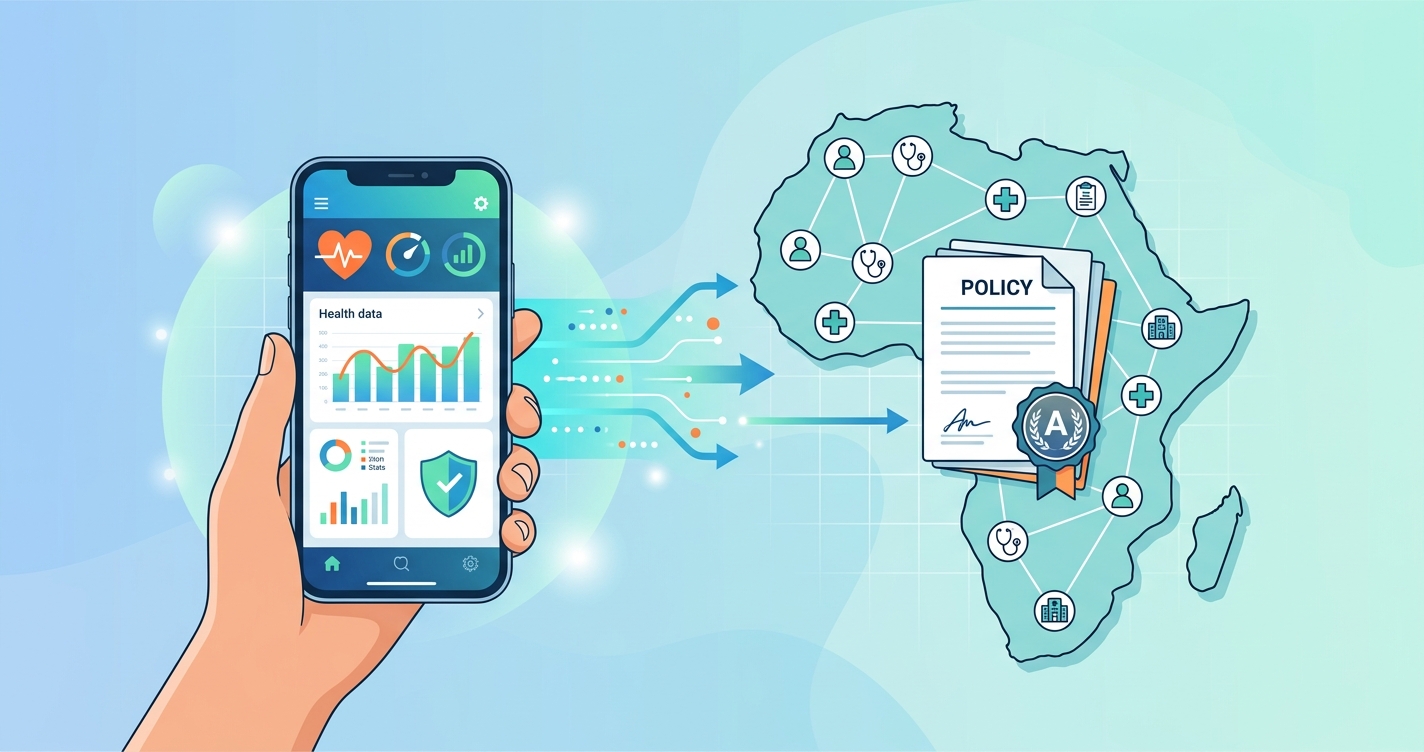
mHealth evidence health policy Africa discussions are no longer happening at the margins of health reform. In many countries, the policy question has shifted from whether mobile and digital health tools matter to which evidence is strong enough to justify national funding, workforce redesign, and formal standards. That is a more demanding conversation, and probably a healthier one. Pilot enthusiasm can open doors, but policy usually moves when ministries can point to workforce data, implementation lessons, and measurable service gains.
"As of 2024, 1,042,441 community health workers have been deployed across 48 African countries." — Africa CDC and UNICEF, 2024 community health survey
How mHealth evidence shapes health policy in Africa
The cleanest way to think about this is that evidence changes policy when it answers practical questions ministers and program directors actually have. Does the tool improve frontline work? Does it fit national information systems? Can the country afford it after donor support fades? Can supervisors trust the data enough to manage programs differently?
That sounds obvious, but a lot of digital health debate still gets stuck at the level of possibility. Policy teams need something more concrete. They need evidence that a digital workflow can survive low bandwidth, patchy power, training constraints, procurement rules, and district-level variation.
Ayomide Owoyemi and colleagues made that point in a 2022 Frontiers in Digital Health review, "Digital Solutions for Community and Primary Health Workers: Lessons From Implementations in Africa." Their review of primary-care and community-health deployments found recurring implementation barriers: network coverage, power supply, and uneven digital competence. That matters for policy because it pushes governments away from flashy pilot metrics and toward boring but decisive questions about training, infrastructure, and standards.
What kind of evidence tends to move policy?
| Evidence type | What policymakers learn from it | Policy effect it can have |
|---|---|---|
| Implementation reviews | Where digital programs fail in real field settings | Better procurement rules and rollout standards |
| CHW workforce surveys | How large the frontline workforce is and where gaps remain | Funding plans and national workforce policy |
| Multi-country user studies | Whether frontline workers actually adopt the tools | Training, supervision, and device strategy |
| Interoperability evidence | Whether data can flow into DHIS2 or national systems | Standards for integration and vendor selection |
| Financing evidence | Whether domestic budgets can sustain scale | Shift from donor pilots to line-item investment |
Policy people do not usually need one perfect study. They need a pattern. When multiple evidence streams point in the same direction, policy starts to harden.
A few patterns now look hard to ignore:
- Community health programs need interoperable digital tools, not isolated apps.
- Training changes outcomes almost as much as software design.
- Hardware-light workflows are easier to scale.
- Donor-backed pilots stall when domestic financing is vague.
- National programs care more about governance and continuity than novelty.
Workforce evidence is changing the policy conversation
One of the strongest policy levers in Africa right now is workforce evidence. The 2024 Africa CDC-UNICEF community health survey put real numbers behind a conversation that had often been too abstract. The survey found roughly seven community health workers per 10,000 people across the continent, or one CHW for every 1,235 people, and counted more than 1.04 million CHWs in 48 countries.
Those numbers matter because policy follows visibility. Once governments can see the size of the workforce, the gender mix, the financing gap, and the service mix, digital strategy stops being a side project and becomes part of workforce planning. Africa CDC also noted that only six countries domestically finance more than 80% of their CHW programs, while 18 rely on donors for 90% or more of their budgets. That is not just a financing statistic. It is a policy warning.
If digital tools are supposed to support CHWs at scale, then countries need a plan for devices, data systems, supervision, and maintenance that survives beyond the grant cycle. Otherwise the evidence only proves that donor-funded pilots can work for a while.
Industry applications
Community health worker programs
This is where policy influence is easiest to see. Ministries increasingly want digital tools that help CHWs document visits, triage risk, track referrals, and report up the chain without building parallel systems. Evidence from digital CHW deployments in Africa has been useful precisely because it is operational. It shows what happens under field conditions, not just in lab-style evaluations.
Courtney T. Blondino, Alex Knoepflmacher, Ingrid Johnson, Cameron Fox, and Lorna Friedman added an important layer in a 2024 BMC Public Health paper based on a survey of 1,141 CHWs across 28 countries. They found that digital training was positively associated with actual use of devices and with CHWs' belief that digital tools improved their impact. Cost still showed up as a barrier. That lands directly in policy territory. It suggests adoption is not only a technology problem. It is a training and financing problem.
National digital health architecture
Evidence also shapes policy through integration requirements. A ministry may like an mHealth tool in one district, but national adoption usually depends on whether it can connect to existing reporting and health information systems. That is one reason interoperability keeps moving from technical jargon into policy language.
For medhealthscan.com's audience, this is familiar territory. Field tools need to work with national reporting structures, district dashboards, and offline collection models. If they do not, the policy case weakens fast. Governments do not want fifty successful pilots that cannot speak to one another.
Financing and domestic investment
AFIDEP's Digital Health and AI for Health Policy Initiative has pushed a similar message from the policy side: African health systems need governance frameworks, evidence use, and practical policy capacity if digital tools are going to improve care rather than deepen fragmentation. I think that framing is right. The bottleneck is not a lack of apps. It is a lack of institutions that can decide which evidence deserves scale.
Current research and evidence
The evidence base is broader than it was a few years ago, and the more recent studies tend to agree on the same few points.
Owoyemi and colleagues, writing in 2022, argued that digital health implementations for community and primary health workers in Africa should be judged through an evidence-based implementation lens. Their review did not present digital health as automatic progress. It highlighted the recurring reasons deployments struggle: connectivity, power, and worker readiness.
Blondino and colleagues, in 2024, added a wide cross-country frontline perspective. Their survey found general optimism among CHWs, but also showed that training and cost shape whether digital tools become routine practice. That distinction matters for policy. Enthusiasm is not enough; support systems matter.
Africa CDC's 2024 workforce survey gave policymakers something just as important as an impact study: denominators. It quantified the current CHW base, exposed the financing gap, and reinforced the case for interoperable community information systems that support real-time decision-making.
There is also a regional governance layer emerging around this evidence. WHO extended its global digital health strategy timeline and, with the European Union, announced support in 2025 for digitized health systems in sub-Saharan Africa. Meanwhile, African policy organizations such as AFIDEP are trying to strengthen the bridge between research findings and actual policy design. The broad signal is clear: digital health is now being treated as a system-governance issue, not just an innovation issue.
A few findings keep showing up across the literature and policy documents:
- Evidence from implementation matters more than app feature lists.
- CHW adoption improves when training is structured and repeated.
- National scale requires standards, not just successful pilots.
- Financing evidence is now central to digital health policy.
- Interoperability has become a policy requirement, not an optional technical upgrade.
The future of mHealth evidence in African health policy
The next phase will probably be less romantic and more useful. Policy teams are getting harder to impress with pilot stories alone. They want evidence tied to domestic budgets, workforce planning, data governance, and integration with national systems.
That is good news for serious implementers. It means the strongest mHealth evidence health policy Africa cases will come from programs that can show real field durability: offline capability, low training burden, measurable uptake by CHWs, and clean handoffs into national platforms.
I also expect more policy attention to move toward evidence synthesis rather than single-project storytelling. Multi-country surveys, continental workforce data, and implementation reviews are easier for ministries to use than isolated vendor claims. In other words, the most influential evidence may be the least glamorous kind.
For field deployment teams, that raises the bar. Tools in this space, including the direction Circadify is pursuing, have to fit into country-led systems rather than sit beside them. If the technology helps community teams collect cleaner frontline data with fewer hardware demands, the policy opening gets wider. If it adds another disconnected workflow, it probably does not.
Frequently Asked Questions
What kind of mHealth evidence matters most for health policy in Africa?
The evidence that usually matters most is implementation evidence: adoption by frontline workers, integration with national systems, costs, training burden, and measurable effects on service delivery.
Why do CHW studies matter so much in digital health policy?
Because CHWs are often the front door to care in low-resource settings. If digital tools do not work for them in the field, the policy case for national scale weakens quickly.
Is policy driven more by impact studies or by operational data?
Usually by both, but operational data often carries more weight than people expect. Ministries need to know whether programs can survive real-world constraints, not just whether outcomes improved in a controlled setting.
Why is interoperability such a big policy issue now?
Because countries want digital programs that strengthen national systems, not disconnected pilots. If data cannot flow into existing reporting and decision systems, policy support tends to fade.
For related reading, see our analysis of how smartphone screening integrates with DHIS2 and interoperability standards for global health platforms. If you are evaluating field-ready digital health systems for low-resource settings, Circadify's broader global health coverage is here: circadify.com/blog.