Data Sovereignty in Global Health Programs: What to Know
A practical look at data sovereignty in global health programs, from consent and hosting rules to cross-border research, AI governance, and ministry control.
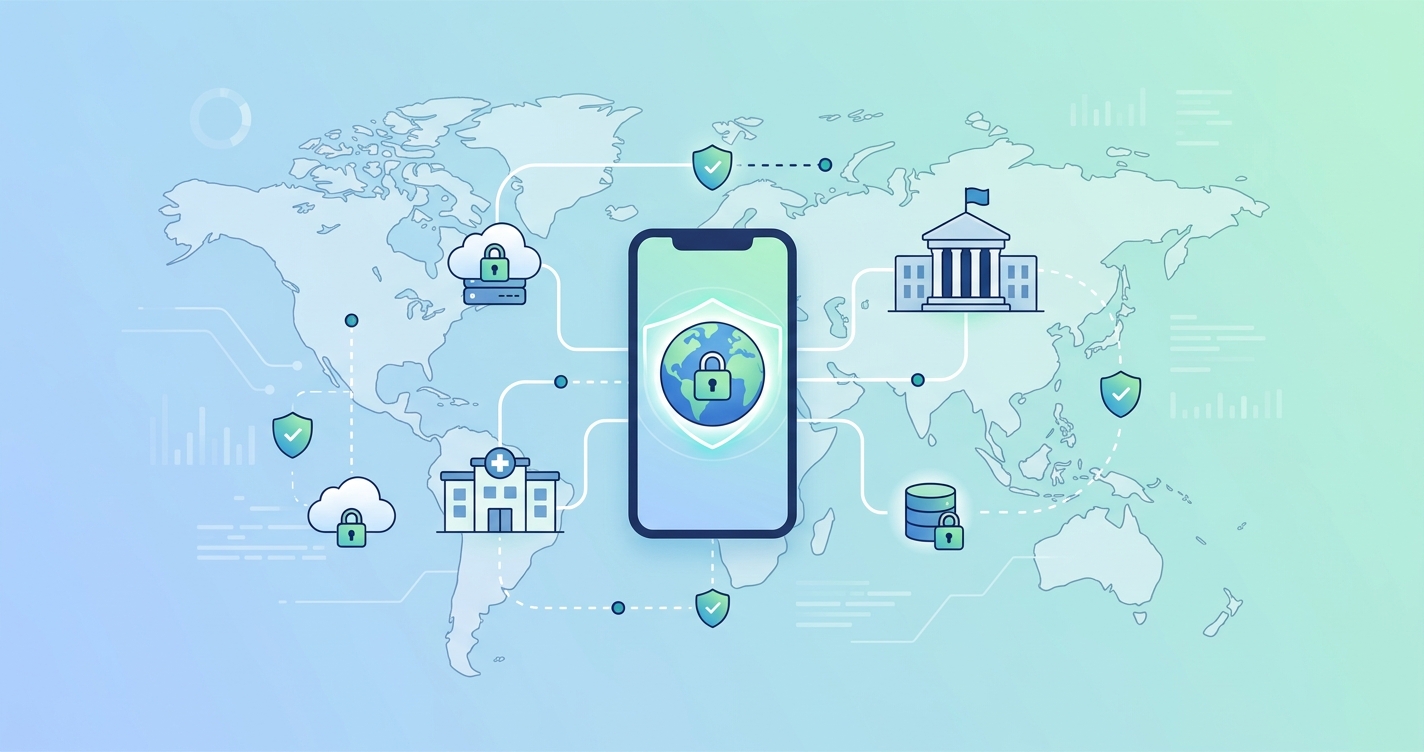
Data sovereignty global health programs are now dealing with a tension that used to sit in the background. Digital tools make it easier to collect, move, and analyze health data across borders. Ministries of health, funders, and implementation partners still need that data to support disease surveillance, community programs, and research. But countries increasingly want a clearer answer to a basic question: who controls the data once it leaves the clinic, district server, or national platform?
"Health data is a strategic asset for evidence-based decision-making, disease prediction, policy development and improving public health outcomes." — Africa CDC, 2025, announcing work on a continental health data governance framework
Why data sovereignty matters in global health programs
At its simplest, data sovereignty means health data remains governed by the laws, institutions, and public-interest priorities of the country where it was collected. In global health, that matters because programs often involve outside funders, multinational NGOs, cloud vendors, university research teams, and software platforms that were not built inside the host country.
That arrangement can work. It often does. Still, the risks are obvious once you say them out loud. A ministry may finance a national program but not control where the records are stored. A donor-backed app may collect community screening data that local teams cannot easily reuse. A research collaboration may export datasets for analysis abroad while the originating country struggles to access its own cleaned data products later.
The World Health Organization's Data Governance Model and Framework, first introduced in 2020, argues that data should be treated as a public good while still protecting human rights, privacy, and Member States' trust. That balance is the real issue. Data sovereignty is not a call to lock every dataset in place forever. It is a push to make sure countries keep legal authority, operational visibility, and negotiating power over how health data is stored, shared, and reused.
Common governance models in global health data programs
| Model | Who usually controls infrastructure | Operational upside | Sovereignty risk |
|---|---|---|---|
| Donor-managed platform | External implementer or vendor | Fast rollout and technical support | Local ministries may lack long-term control |
| Nationally hosted system | Ministry or domestic public agency | Stronger policy alignment and local oversight | Requires more in-country technical capacity |
| Regional or cloud-hosted hybrid | Shared between country teams and outside providers | Better scalability and backup options | Jurisdiction and access rules can get blurry |
| Trusted research environment | Controlled access for approved researchers | Supports analysis without broad copying of data | Governance depends on clear agreements and enforcement |
In practice, most programs end up in the hybrid column. That is where the hard questions show up.
- Where is the primary dataset hosted?
- Who approves secondary use?
- Can the ministry audit access logs?
- What happens if a contract ends?
- Can local researchers use the data on equal terms?
Those are governance questions, but they shape field operations too.
Data sovereignty in global health programs and field deployment
For medhealthscan.com's audience, the operational side matters as much as the policy side. Community screening, mobile health deployments, and low-resource digital programs usually depend on distributed data collection. A frontline worker captures information on a phone. That record syncs later. It may pass through an interoperability layer, an analytics platform, and a donor dashboard before it becomes part of national reporting.
The more layers a system has, the more sovereignty questions it creates.
PATH has been making a similar point in its digital public infrastructure work. In 2024 and 2025 materials on governance and climate-health data systems, PATH argued that countries need shared infrastructure, clear stewardship, and trusted data exchange if digital health is going to scale fairly in low- and middle-income settings. The technical stack matters, but stewardship matters more. If a country cannot govern identity, consent, exchange, and reuse, the nicest dashboard in the world does not solve much.
A useful way to think about it is this: data sovereignty is not only about storage location. It is also about decision rights.
Where programs usually run into trouble
- Consent language allows collection but says little about downstream reuse.
- Contracts define vendor access better than ministry access.
- Data models are optimized for donor reporting rather than national workflows.
- Local teams cannot export or analyze their own program data without outside help.
- Cross-border research agreements take months because legal and ethical rules are inconsistent.
None of that is rare. It is just finally being discussed more openly.
Industry applications
National digital health programs
National-scale systems are under the most pressure to get this right. WHO's 2025 policy brief on health data governance in the age of AI says countries need stronger standards, secure platforms, workforce investment, and broad stakeholder engagement if they want trustworthy digital health systems. AI makes weak governance more visible because models depend on large, reusable datasets. If those datasets are incomplete, biased, or governed poorly, the technical problem quickly becomes a political one.
Research consortia and emergency response
Cross-border research is where sovereignty tensions often become concrete. The International COVID-19 Data Alliance, convened by Health Data Research UK, is a good example. In a 2024 Lancet Digital Health paper on lessons from ten international COVID-19 driver projects, the ICODA team described familiar barriers: slow data preparation, difficult cross-border agreements, and the need for secure environments that researchers in multiple countries could trust. Their answer was not unrestricted data flow. It was standardized agreements, more curation support, and trusted research environments.
That is probably the clearest middle path available right now. Countries still participate in international research, but under more explicit rules.
African regional governance efforts
Africa CDC has pushed this conversation forward fast. At the 2025 Africa Health ExCon, the organization said it was developing a Continental Health Data Governance Framework for endorsement at the African Union Summit in February 2026. The goal is not simply localization for its own sake. It is alignment on legislation, protections, and cross-border data rules that African health systems can actually use.
I think that matters because fragmented regulation is exhausting for everyone involved. Ministries want control. Researchers want access rules they can plan around. Implementers want fewer contradictory requirements. A regional framework cannot remove every friction point, but it can lower the number of one-off negotiations.
Current research and evidence
Several recent sources point in the same direction.
WHO's own data governance framework says public value and Member State trust have to sit together. That sounds abstract until you see what happens when they do not. Programs stall, ministries push back on foreign hosting, and procurement teams become wary of systems that cannot show clear governance controls.
The WHO Regional Office for Europe made the point more directly in its 2025 AI-era governance brief. The report argues that health data governance is now central to interoperability, data quality, ethical reuse, and public trust. In other words, governance is no longer a compliance appendix. It is part of system design.
Research on low- and middle-income settings points the same way. Rada Hussein of the Ludwig Boltzmann Institute for Digital Health and Prevention, Ashley Griffin of Stanford's VA Palo Alto Health Care System, Adrienne Pichon of Columbia University, and Jan Oldenburg argued in a Journal of the American Medical Informatics Association paper that LMIC strategies need to address data rights, trust, and interoperability together rather than as separate policy tracks.
Ilona Kickbusch, who co-chaired The Lancet and Financial Times Commission on Governing Health Futures 2030, has framed this as a question of data justice and digital health citizenship. That language can feel lofty, but the practical message is straightforward: countries and citizens should not lose agency over health data just because the software market globalized faster than governance did.
A few evidence-backed lessons keep repeating:
- Public trust drops when data-sharing rules are unclear.
- Local stewardship matters even when infrastructure is partly outsourced.
- Cross-border research works better with trusted environments than with ad hoc file transfers.
- Interoperability without governance can widen extraction risks instead of reducing them.
- AI discussions are forcing ministries to revisit old data-sharing assumptions.
The future of data sovereignty in global health
The next phase will probably not be defined by strict isolation. Most global health programs still need cross-border collaboration, multinational analytics, and cloud-scale infrastructure. What is changing is the expectation that these arrangements must be country-led, contractually clear, and technically auditable.
That shifts procurement. It shifts partnership design. It also shifts what ministries ask for from mobile health and screening vendors. They want offline capability, yes, but they also want clearer hosting terms, better consent management, stronger interoperability controls, and more visibility into where national data travels.
For field programs in low-resource settings, that is a healthy correction. A phone-based screening workflow is only sustainable if the country can govern the records it creates. Solutions in this space, including the direction Circadify is building toward, have to fit into that reality rather than pretend governance is someone else's job.
Frequently Asked Questions
What does data sovereignty mean in global health programs?
It means health data is governed by the laws, institutions, and policy priorities of the country where it was collected, even when outside vendors, donors, or research partners are involved.
Does data sovereignty mean health data can never cross borders?
No. It usually means cross-border sharing needs explicit legal authority, governance controls, and defined rules for access, reuse, and security.
Why is data sovereignty becoming a bigger issue now?
Because more health programs depend on cloud platforms, AI tools, and international analytics partnerships. Those setups create new questions about control, jurisdiction, and long-term access.
How can ministries protect sovereignty without blocking research?
By using clear data-sharing agreements, trusted research environments, auditable access controls, and procurement terms that preserve national oversight and local reuse rights.
For related reading, see our analysis of how smartphone screening integrates with DHIS2 and interoperability standards for global health platforms. If you are evaluating field-ready digital health systems, Circadify's broader global health research coverage is here: circadify.com/blog.